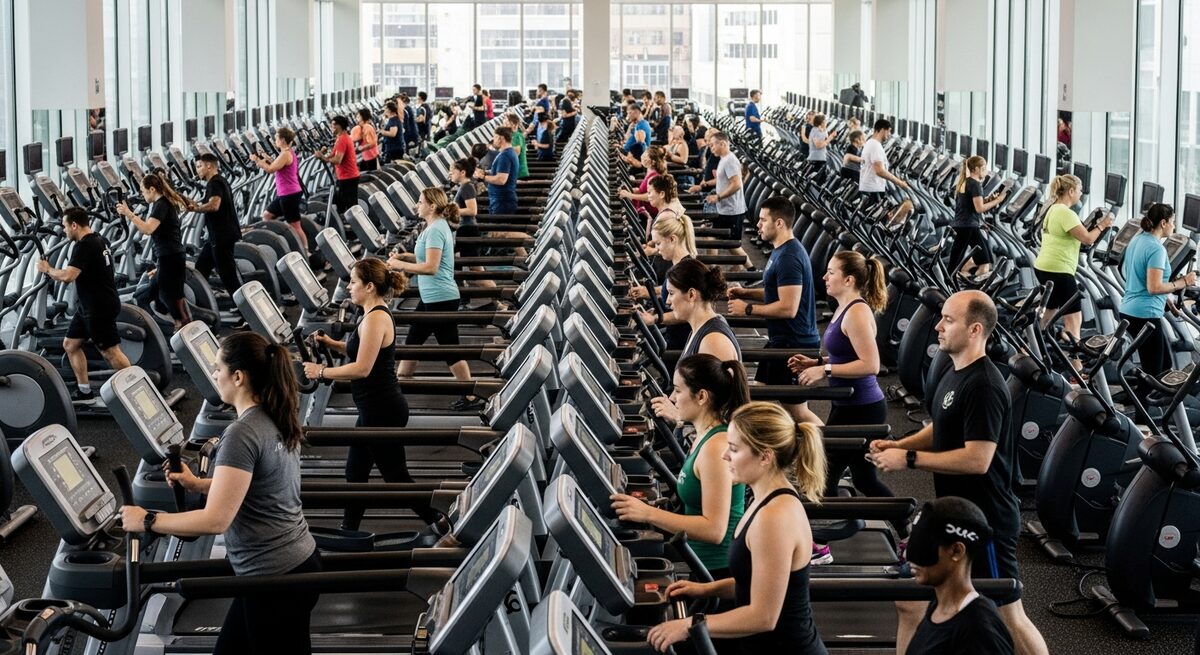
The Fitness Industry Is Booming
Right to Repair & the Independent Technician
Equipment Safety, Liability & Protecting the Investment

For Auto Techs & Skilled Problem Solvers
Now readingFor Electricians
For HVAC Technicians
For Plumbers

For IT Support Specialists
Your electrical instincts already belong inside the machine.
From a dead circuit to a treadmill that will not start, the best service work begins the same way: observe, test, isolate, repair, and verify. NCFET adds the fitness-equipment systems and service standards to the electrical foundation you already use.
Method matters more than a job title.
- Diagnostic reasoning: Read a symptom, test the circuit, and narrow a fault instead of replacing parts at random.
- Electrical testing: Use diagrams, meters, continuity checks, and measured values to understand what a circuit is doing.
- Mechanical awareness: Work carefully around assemblies, fasteners, clearances, and the physical consequences of a repair.
A transition guide is not a job offer. Review the training, costs, and requirements before deciding whether this path fits.
The evidence and the boundary
You bring a service discipline. The equipment still has to be learned.
Electricians work with wiring, equipment, fixtures, and control systems while keeping work aligned with applicable codes. The U.S. Bureau of Labor Statistics describes the occupation as installing, maintaining, and repairing electrical systems—and projects 9% employment growth from 2024 to 2034.[1] Those are useful reference points for the discipline you already bring, not a promise that a new niche will create a job or a particular income.
Make the transition deliberately
A realistic bridge, not a shortcut
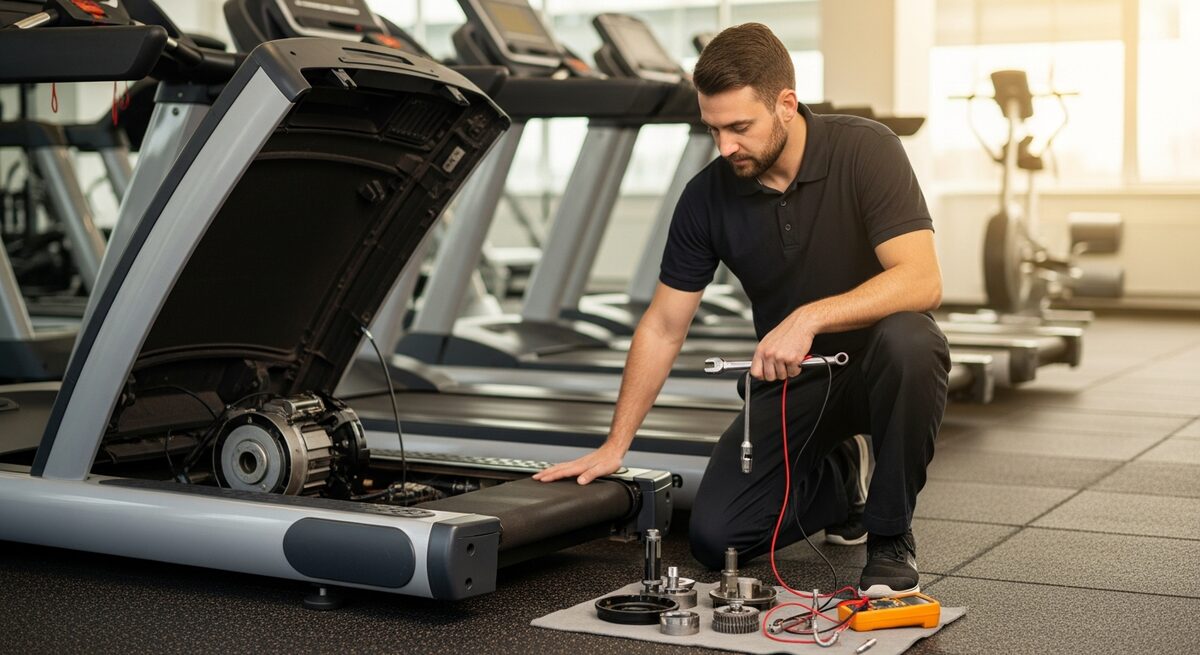
Fitness equipment is not simply building wiring in a smaller cabinet. The transition requires equipment-specific practice with motors, drives, sensors, moving assemblies, manufacturer procedures, and customer-facing service documentation.
Your baseline
Circuit tracing & testing
New systems
Motors, drives & sensors
Safety habit
De-energize, verify, document
The five-skill bridge
Keep your method. Add the machine.
Here is the practical translation from your current work to fitness equipment service.
Diagnostic reasoning
You already do
Read a symptom, test the circuit, and narrow a fault instead of replacing parts at random.
In fitness equipment
Apply the same sequence to a treadmill no-start, intermittent console, incline fault, or motor-control issue.
Electrical testing
You already do
Use diagrams, meters, continuity checks, and measured values to understand what a circuit is doing.
In fitness equipment
Build equipment-specific fluency around controllers, power supplies, emergency stops, speed sensors, and incline motors.
Mechanical awareness
You already do
Work carefully around assemblies, fasteners, clearances, and the physical consequences of a repair.
In fitness equipment
Pair electrical diagnosis with belt tracking, roller condition, lubrication, alignment, and safe reassembly.
Safety discipline
You already do
Respect stored energy, verify a safe work condition, and leave an installation that another professional can trust.
In fitness equipment
Extend that discipline to moving decks, rotating components, exposed conductors, service guards, and documented testing.
Customer service
You already do
Explain what failed, what was tested, and what the customer should do next without hiding behind jargon.
In fitness equipment
Give gym operators a clear finding, repair record, maintenance recommendation, and realistic next step.
What the work adds
What the work asks you to add
The transferable part is your method. The new part is learning how that method applies to equipment people use while moving at speed and load.
Equipment systems
Treadmills, ellipticals, bikes, strength machines, consoles, motors, belts, cables, and safety systems.
Service process
Intake, inspection, diagnosis, repair, operational test, documentation, parts planning, and customer handoff.
Professional boundaries
Know when a repair is appropriate, when a manufacturer procedure controls, and when a customer needs a qualified specialist.
NCFET certification is training and credentialing. It does not guarantee employment, customers, income, or business success.
Choose your next step
Explore before you commit.
Read the requirements, review the pricing, and decide whether the NCFET pathway fits your goals.
References
All sources link to the original publication. Publication dates are shown where the publisher provides them.
- [1]U.S. Bureau of Labor Statistics. Occupational Outlook Handbook: Electricians — 2025.