The Fitness Industry Is Booming
Right to Repair & the Independent Technician
Equipment Safety, Liability & Protecting the Investment
 Now reading
For Auto Techs & Skilled Problem Solvers
For Electricians
For HVAC Technicians
For Plumbers

For IT Support Specialists
The mechanical and diagnostic skills you already have translate to an emerging field.
If you can troubleshoot a motor, trace a circuit, or read a wiring diagram, you possess a problem-solving foundation that aligns directly with the commercial fitness industry.
The automotive, HVAC, and IT support fields are undergoing structural shifts.
In the automotive sector, the transition to EVs and software-defined vehicles is altering the baseline repair landscape. For computer programmers and IT support staff, artificial intelligence is increasingly capable of automating basic code and helpdesk tasks, reshaping the nature of entry-level and support roles.
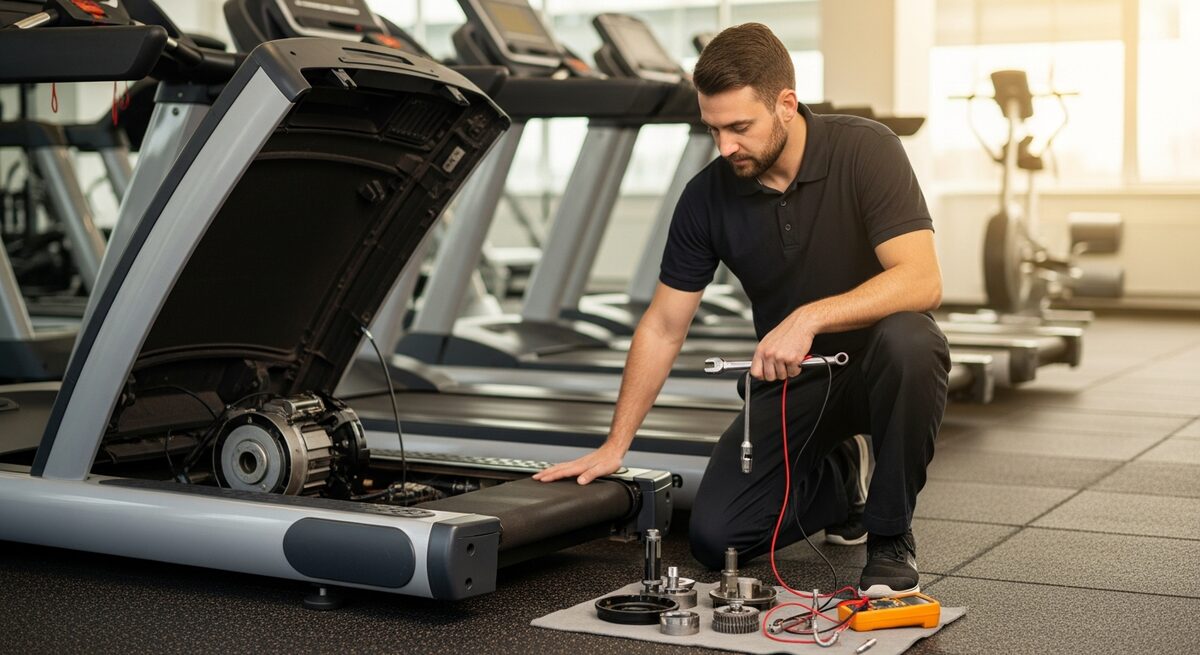
At the same time, fitness facilities depend on mechanical, electrified machines that require hands-on inspection, preventive maintenance, and repair. NCFET analysis identifies a potential service opportunity by comparing the industry's large facility footprint and recurring equipment use with its fragmented technician-training landscape. A modern treadmill involves an AC or DC drive motor, a motor control board, digital console logic, an incline actuator, optical speed sensors, belts, and bearings. Experienced problem solvers who can trace voltage drops or replace bearings already understand many of the underlying systems.
The data driving the career pivot
It isn't just a feeling that the trades and tech are shifting—it's in the data. Navigating technological and economic change means identifying industries with physical infrastructure that remains resistant to automation.
Automotive & Trades
The U.S. BLS projects 825,800 automotive service technician jobs in 2025 with $50,620 median annual pay, and 5% projected growth (2025–2035).[1]
While the field is growing, the work is changing fast. Diagnostics increasingly involve software and EV platforms, making this a pivotal time for mechanics seeking an environment focused heavily on mechanical and electrical fundamentals.
IT & Programming
The BLS projects 121,200 computer programmer jobs in 2024, with a -6% projected decline (2024–2034), resulting in a -7,200 net employment change and about 5,500 annual replacement openings. The BLS explicitly notes that companies will use AI to automate repetitive programming tasks.[2] Computer support specialists (882,300 jobs in 2024) face a -3% decline and about 50,500 annual replacement openings.[3]
A global employer survey by the World Economic Forum expects 170 million jobs created and 92 million displaced globally by 2030; 77% of surveyed employers plan AI-related upskilling, and 41% plan workforce reductions where AI automates tasks.[4]
The Fitness Industry
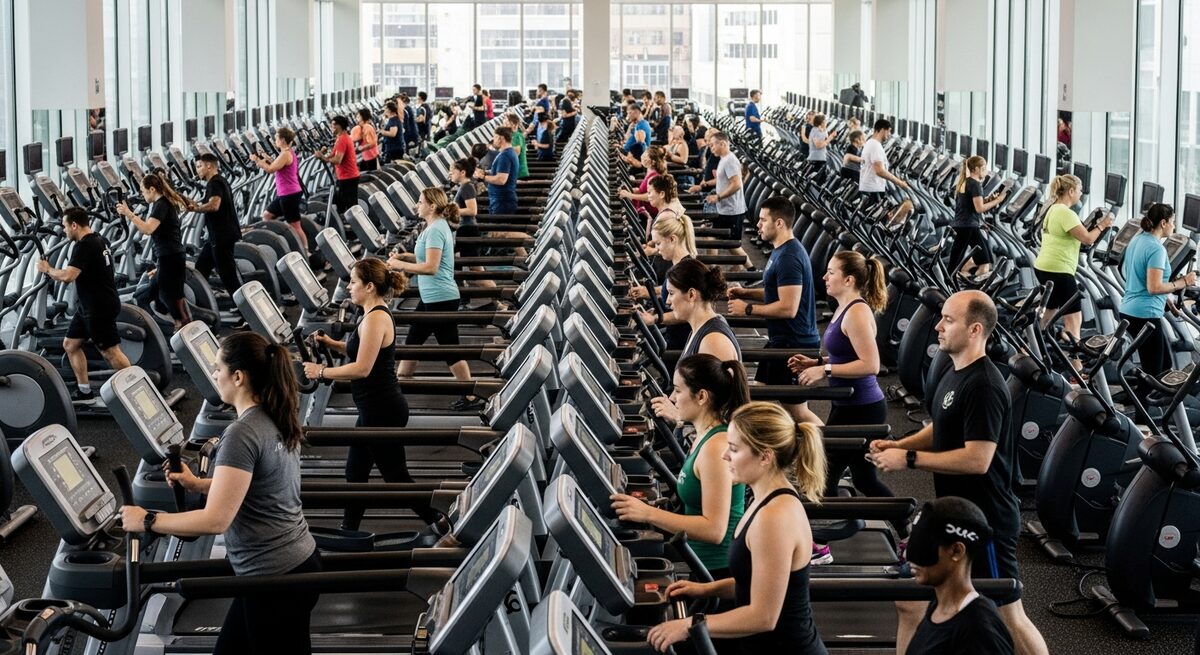
By contrast, the physical fitness footprint continues to expand. The HFA reports that 81 million Americans held fitness-facility memberships in 2025, recording nearly 7 billion visits.[5]
Repeated use places wear on machines, and inspection, parts replacement, adjustment, and testing must still be completed on the equipment itself. That makes hands-on service a practical diversification path to investigate, not a guarantee of work.
* Note: The U.S. government has no dedicated BLS occupation code specifically for "fitness equipment technician." Any claims regarding unmet technician demand are based on NCFET analysis of the installed equipment base versus available certified technicians, not on government-issued vacancy rates. There are no guaranteed jobs, income, or business success.
Your skills translate directly
The jump from cars, HVAC systems, or complex IT hardware to commercial gym equipment is much shorter than you think. Here is how diagnostic abilities map to fitness equipment service.
Electrical Diagnostics & Multimeter Use
Tracing shorts, parasitic draws, checking alternators, or diagnosing HVAC control boards.
Testing treadmill motor controllers (MCBs), checking motor current draw, verifying voltage drops across safety switches, and tracing open circuits.
Mechanical Systems & Tolerances
Replacing serpentine belts, pressing wheel bearings, aligning pulleys, or tightening HVAC blowers.
Aligning and tensioning treadmill walking belts, pressing new generator bearings, replacing strength cables, and lubricating guide rods.
Sensors & Logic
Reading O2 sensors, MAF sensors, IT network telemetry, or thermostat inputs.
Cleaning and replacing optical speed sensors, diagnosing magnetic reed switches, and interpreting console error codes and proprietary diagnostic tools.
Preventive Maintenance & Safety
Multi-point vehicle inspections, fluid changes, and documenting life-safety issues.
Executing comprehensive commercial gym preventive maintenance (PM) schedules and documenting wear-and-tear risks to maintain equipment safety and compliance.
Where the work happens
Fitness equipment technicians operate in diverse environments. While the field requires dedication and continuous skill building, certified technicians can explore service opportunities across multiple sectors:
Commercial Gyms & Studios
Health clubs running treadmills and ellipticals 12–24 hours a day require rigorous, scheduled preventive maintenance and fast response times.
Universities & Schools
Campus recreation centers and athletic department weight rooms feature extensive strength and cardio lineups that see heavy, continuous student use.
Hotels & Hospitality
Hospitality chains rely on operational fitness centers as a core amenity, often contracting external technicians for regular upkeep and repairs.
Apartment Communities
Multi-family residential buildings frequently maintain unstaffed fitness centers, relying heavily on independent technicians for compliance and safety checks.
Manufacturers & Service Companies
Manufacturer-authorized teams and regional service companies are possible work environments for field technicians handling warranty repairs and service contracts.
Independent Mixed-Brand Service
Some experienced technicians may pursue independent work across multiple brands, subject to local business requirements and access to the appropriate parts, tools, and service information.
The FTC's 2021 report to Congress documents how restrictions involving parts, tools, manuals, and diagnostic software can affect independent repair.[6] Access varies by manufacturer and jurisdiction, so mixed-brand service requires careful research. NCFET provides credentialing and training, but does not guarantee employment, income, or business success.
Ready to pivot? See the pathway.
If you have the baseline mechanical aptitude, NCFET provides the specific systems knowledge, brand-agnostic techniques, and safety standards needed to transition into commercial fitness equipment repair.
References
All sources link to the original publication. Publication dates are shown where the publisher provides them.
- [1]U.S. Bureau of Labor Statistics. Occupational Outlook Handbook: Automotive Service Technicians and Mechanics — 2025.
- [2]U.S. Bureau of Labor Statistics. Occupational Outlook Handbook: Computer Programmers — 2024.
- [3]U.S. Bureau of Labor Statistics. Occupational Outlook Handbook: Computer Support Specialists — 2024.
- [4]World Economic Forum. Future of Jobs Report 2025: 78 million new job opportunities by 2030, but urgent upskilling needed to prepare workforces — January 2025.
- [5]Health & Fitness Association (HFA). 81 Million Americans Were Members of a Fitness Facility in 2025: New HFA Report Finds — April 9, 2026.
- [6]U.S. Federal Trade Commission. Nixing the Fix: An FTC Report to Congress on Repair Restrictions — May 6, 2021.