
The Fitness Industry Is Booming
 Now reading
Right to Repair & the Independent Technician
Equipment Safety, Liability & Protecting the Investment

For Auto Techs & Skilled Problem Solvers
For Electricians
For HVAC Technicians
For Plumbers

For IT Support Specialists
Right to Repair is rewriting equipment service — and independent technicians are positioned to win
For decades, equipment manufacturers steered every repair back through their own authorized networks. A federal crackdown and a wave of state laws are breaking that model apart — and handing gym owners the freedom to choose who maintains their machines.
“Right to repair” is a simple idea: the people who own a machine — not the company that manufactured it — should decide who fixes it. Owners and the independent technicians they hire should have fair access to the parts, tools, manuals, and diagnostic information needed to keep equipment running.
For most of the last two decades, that idea ran headlong into manufacturer practice. In May 2021, the U.S. Federal Trade Commission delivered a landmark report to Congress — Nixing the Fix — cataloguing the ways manufacturers across industries restrict repair: limiting the availability of spare parts and service manuals to “authorized” providers, locking diagnostics behind proprietary software, using product designs that make independent repair harder, and asserting that independent service voids the warranty. The Commission's conclusion was blunt: “there is scant evidence to support manufacturers' justifications for repair restrictions.”[1]
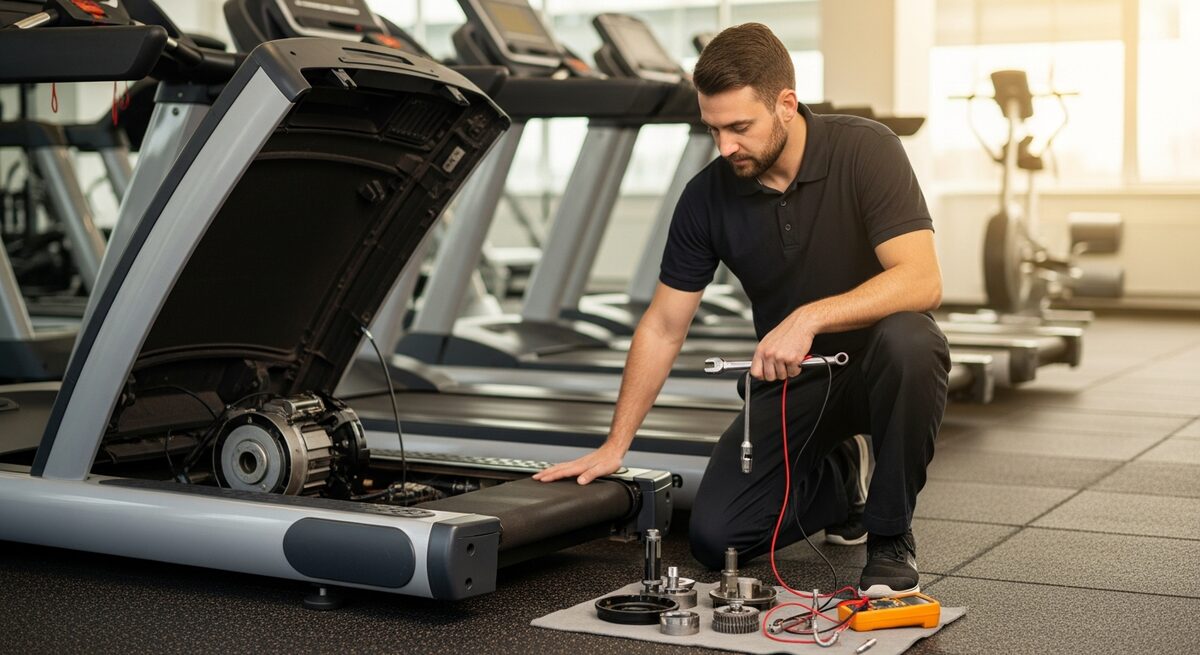
Fitness equipment owners know these tactics well. Commercial treadmills, ellipticals, and strength machines increasingly ship with networked consoles, software-locked error codes, and parts channels that historically sold only to original equipment manufacturer (OEM) dealers. The practical effect: a gym in a mid-size market could wait weeks for a factory-authorized technician while a capable independent tech sat across town, blocked by nothing but policy.
How the repair market got monopolized
The FTC's report identified a consistent playbook manufacturers use to steer repair revenue back to themselves.[1] Every item on this list has a direct parallel in commercial fitness equipment.
Parts & manuals withheld
Spare parts, schematics, and service manuals restricted to authorized service networks — leaving owners and independent techs unable to source what a repair needs.
Software & diagnostic locks
Error codes and calibration routines gated behind proprietary service software or dealer-only logins, turning a 20-minute fix into a mandatory service call.
Warranty-void threats
Claims that independent service or non-OEM parts void the warranty — conditions the FTC has warned may violate the Magnuson-Moss Warranty Act's tie-in prohibitions.
Authorized-only networks
Service contracts and telematics designed so only the manufacturer's own network can 'officially' touch the machine, regardless of who is qualified.
The law caught up fast
In the span of three years, right to repair went from advocacy slogan to binding law across a growing list of states — with unanimous federal backing.
Publishes “Nixing the Fix,” a report to Congress finding “scant evidence” to justify manufacturers' repair restrictions.[1]
Executive Order 14036 directs the FTC to address “unfair anticompetitive restrictions on third-party repair.”[3]
Votes unanimously to ramp up enforcement against illegal repair restrictions, including warranty-void tie-ins.[2]
Signs the nation's first broad Digital Fair Repair Act — parts, tools, and documentation for independent repair.[4]
Why the economics matter: the U.S. PIRG Education Fund estimates that choosing repair over replacement saves the average American household roughly $382 per year — about a fifth of annual household spending on electronics and appliances.[9] Scale that logic up to a commercial cardio floor, where a single machine can cost more than $8,000, and the case for accessible, competitive repair becomes overwhelming.
What this means for gym owners and operators
The single biggest shift is freedom of choice. With 77 million Americans holding gym memberships across a record number of facilities,[10] uptime is a competitive weapon — and operators are no longer captive to one service channel.
Choose who repairs
Operators can hire qualified independent technicians for mixed-brand fleets instead of juggling a separate authorized provider per manufacturer.
Warranty protection
Federal warranty law prohibits conditioning coverage on OEM-only service in most cases — a position the FTC has said it will enforce.
Faster, competitive service
Competition among service providers means faster response times and market-rate pricing — instead of one quote and a multi-week wait.
What this means for independent technicians
Every right-to-repair statute enacted so far follows the same core template: manufacturers must make parts, tools, and documentation available to owners and independent repair providers on fair and reasonable terms.[4],[5],[6] Oregon went further still, banning “parts pairing” — the software practice of rejecting a genuine replacement part unless the manufacturer blesses it.[7] Each new statute chips away at the walls that kept independent technicians out of the market.
For the fitness equipment trade, the timing could hardly be better. The service gap documented across this series — booming demand, an aging installed base, and very few qualified technicians — now comes with a legal environment that actively protects the independent, all-brands service model. The technician who can competently service a Life Fitness treadmill, a Precor elliptical, and a Hammer Strength rack in the same visit is exactly who this legislation empowers.
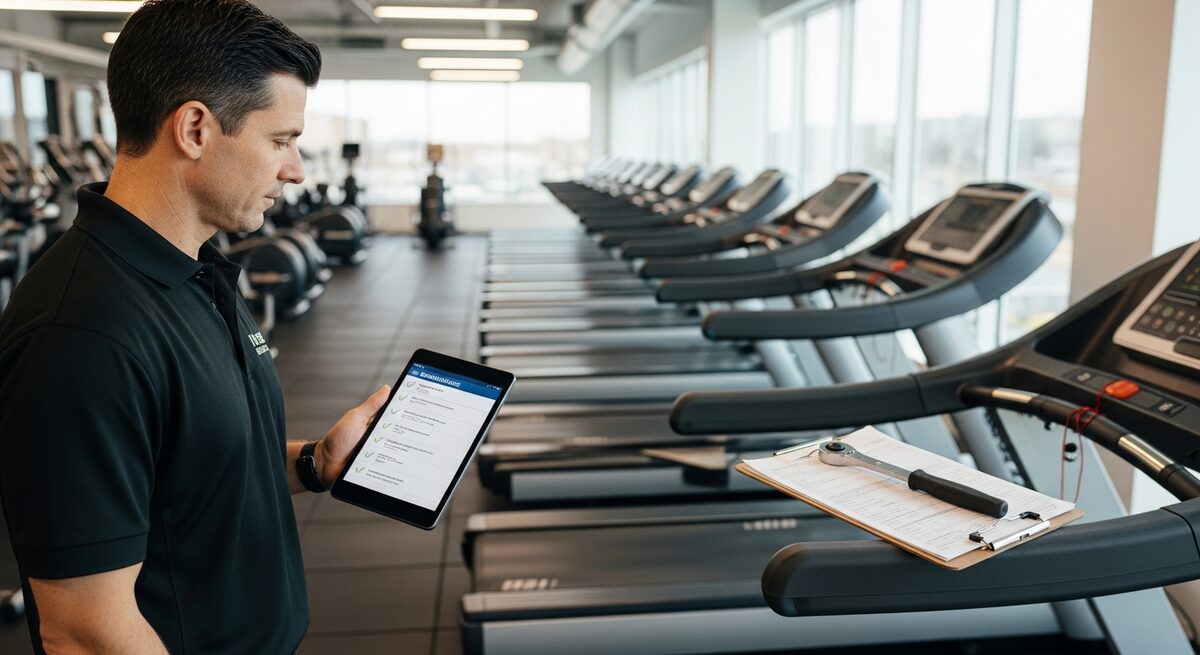
What the law cannot supply is trust. Access to parts and manuals does not tell a facility owner that the person opening their $10,000 treadmill knows what they are doing. That is what independent, standards-based certification is for — it converts the legal right to repair into a credible business of repair.
References
All sources link to the original publication. Publication dates are shown where the publisher provides them.
- [1]U.S. Federal Trade Commission. Nixing the Fix: An FTC Report to Congress on Repair Restrictions — May 6, 2021.
- [2]U.S. Federal Trade Commission. FTC to Ramp Up Law Enforcement Against Illegal Repair Restrictions (unanimous policy statement) — July 21, 2021.
- [3]Federal Register. Executive Order 14036 — Promoting Competition in the American Economy (86 FR 36987) — signed July 9, 2021.
- [4]Office of Governor Kathy Hochul, New York State. Governor Hochul Signs the Digital Fair Repair Act Into Law — December 28, 2022.
- [5]Minnesota Attorney General's Office. The Right to Repair in Minnesota (Digital Fair Repair Act, Minn. Stat. § 325E.72) — effective July 1, 2024.
- [6]California Department of Consumer Affairs. Industry Advisory — The Right to Repair Act (SB 244) Effective July 1, 2024 — signed October 10, 2023.
- [7]Consumer Reports Advocacy. Oregon Governor Signs Landmark Right to Repair Bill Into Law (SB 1596) — March 28, 2024.
- [8]Colorado General Assembly. HB24-1121 — Consumer Right to Repair Digital Electronic Equipment — signed May 28, 2024.
- [9]U.S. PIRG Education Fund. Repair Saves Families Big (household savings from repair over replacement) — 2023.
- [10]Health & Fitness Association (formerly IHRSA). How 77 Million Fitness Members Work Out — New HFA Data — 2025.