
The Fitness Industry Is Booming
Right to Repair & the Independent Technician
 Now reading
Equipment Safety, Liability & Protecting the Investment
For Auto Techs & Skilled Problem Solvers
For Electricians
For HVAC Technicians
For Plumbers

For IT Support Specialists
Safety, liability, and the six-figure lineup: why every gym needs a certified technician
Exercise equipment sends hundreds of thousands of Americans to the emergency room every year. For gym operators, the difference between a defensible incident and a devastating one usually comes down to a single question: can you produce the maintenance records?
ER-treated exercise-equipment injuries in the U.S. in 2020 (CPSC/NEISS)[1]
Treadmills recalled in a single 2021 action after one death and 70+ incidents[3]
Commercial treadmill lifespan with proper maintenance — vs. 3–5 without[8]
Typical annual maintenance & repair spend at a large commercial gym[9]
The machines on a gym floor are not furniture. They are motorized, load-bearing equipment operated all day by untrained members — and federal injury surveillance shows what happens when they are not kept right.
The U.S. Consumer Product Safety Commission's injury-tracking system (NEISS) recorded roughly 409,000 emergency-room-treated injuries associated with exercise and exercise equipment in 2020 alone.[1],[2] Treadmills are a persistent leader within that category: an 18-year review of U.S. emergency room visits found treadmill-associated head injuries steadily rising.[4] And when equipment hazards go unaddressed at scale, the consequences make national news — in May 2021, about 125,000 Peloton Tread+ treadmills were recalled after dozens of entrapment incidents, including the death of a child.[3]
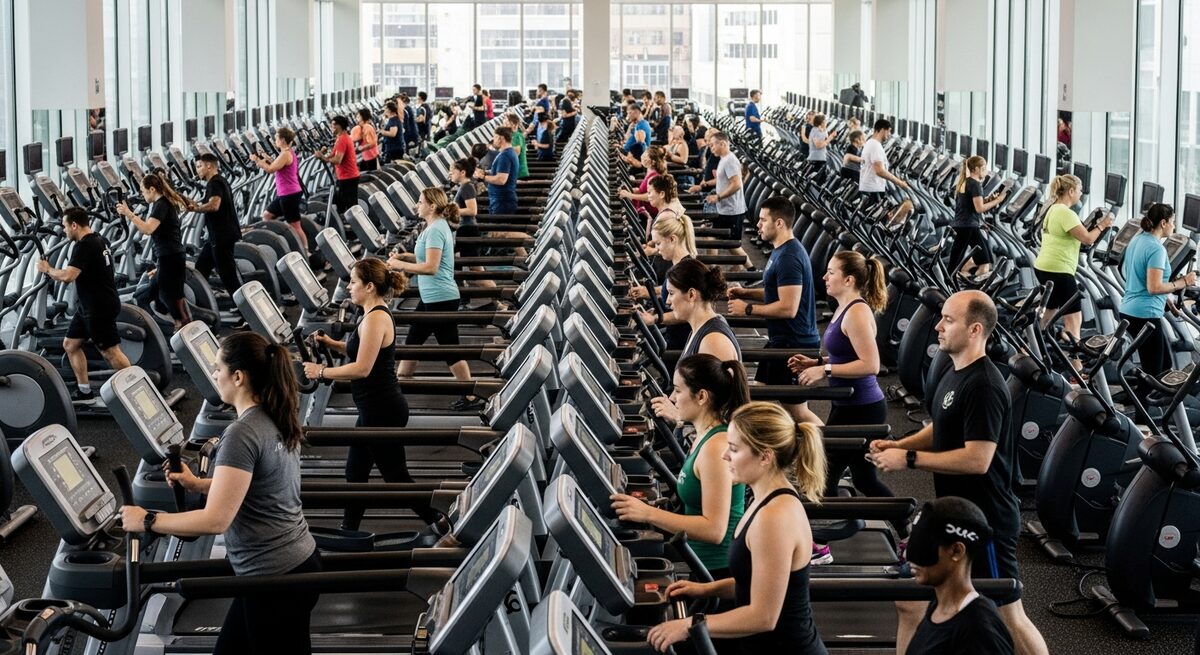
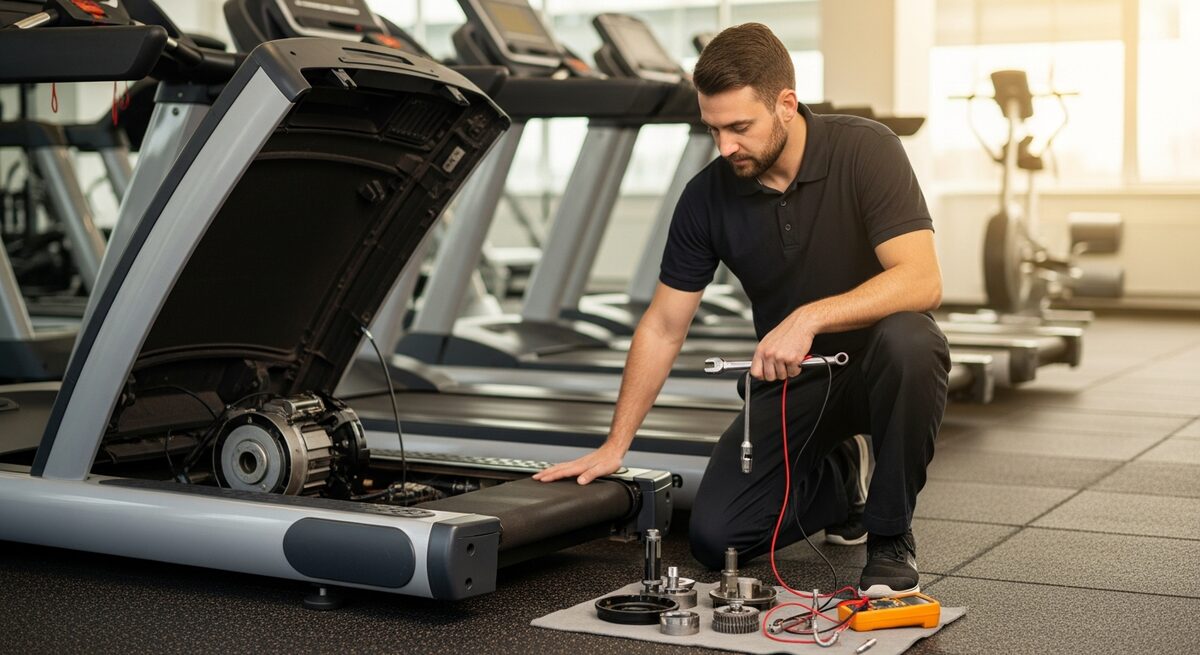
Commercial facilities carry the same physics with far more usage. A single commercial treadmill can log thousands of miles per year under every body type and stride a membership can throw at it. Belts glaze, decks wear, rollers accumulate buildup and bearings fail, cables fray inside their sheathing, and bolts back out — quietly, until the day they don't.
Liability runs straight through the maintenance log
When a member is hurt on a machine, the legal analysis follows a well-worn path: did the facility owe a duty of care, did it breach that duty, and did the breach cause the injury? Courts consistently treat reasonable inspection and maintenance of equipment as part of a health club's duty to its members.[6] Liability waivers help, but in many states they do not shield a facility from claims of gross negligence — such as knowingly leaving a defective machine in service.[7]
In practice, that means the facility's maintenance documentation becomes the centerpiece of any claim. Plaintiff's attorneys request inspection schedules, service logs, repair invoices, and employee training records in discovery; a facility that cannot produce them is defending an injury case with empty hands.[6] The inverse is just as true: a complete, timestamped log showing that the machine was inspected and serviced on schedule by a qualified technician is the strongest evidence a facility can offer that it met its duty of care.
There is also a recognized standard to point to. ASTM International publishes F2276, the standard specification for fitness equipment, which addresses design, safety, and the maintenance information manufacturers must supply with each machine.[5] A facility that follows the manufacturer's documented maintenance procedures — and can prove it — is aligning itself with the industry's own published standard of care.
Anatomy of a defensible maintenance record
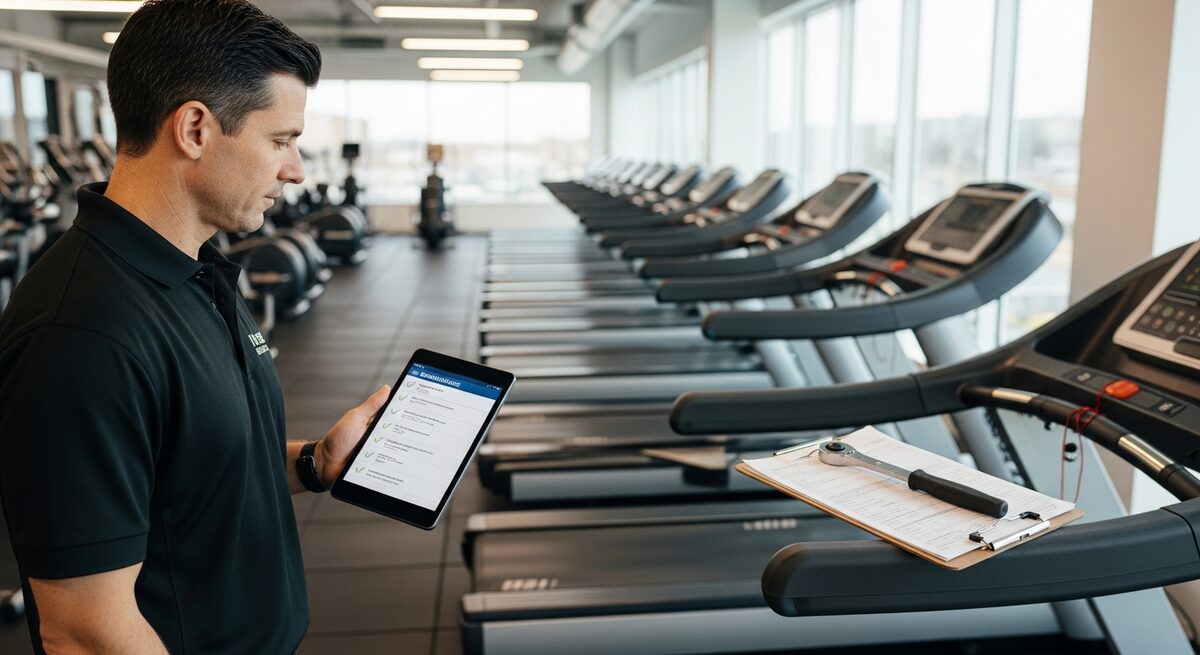
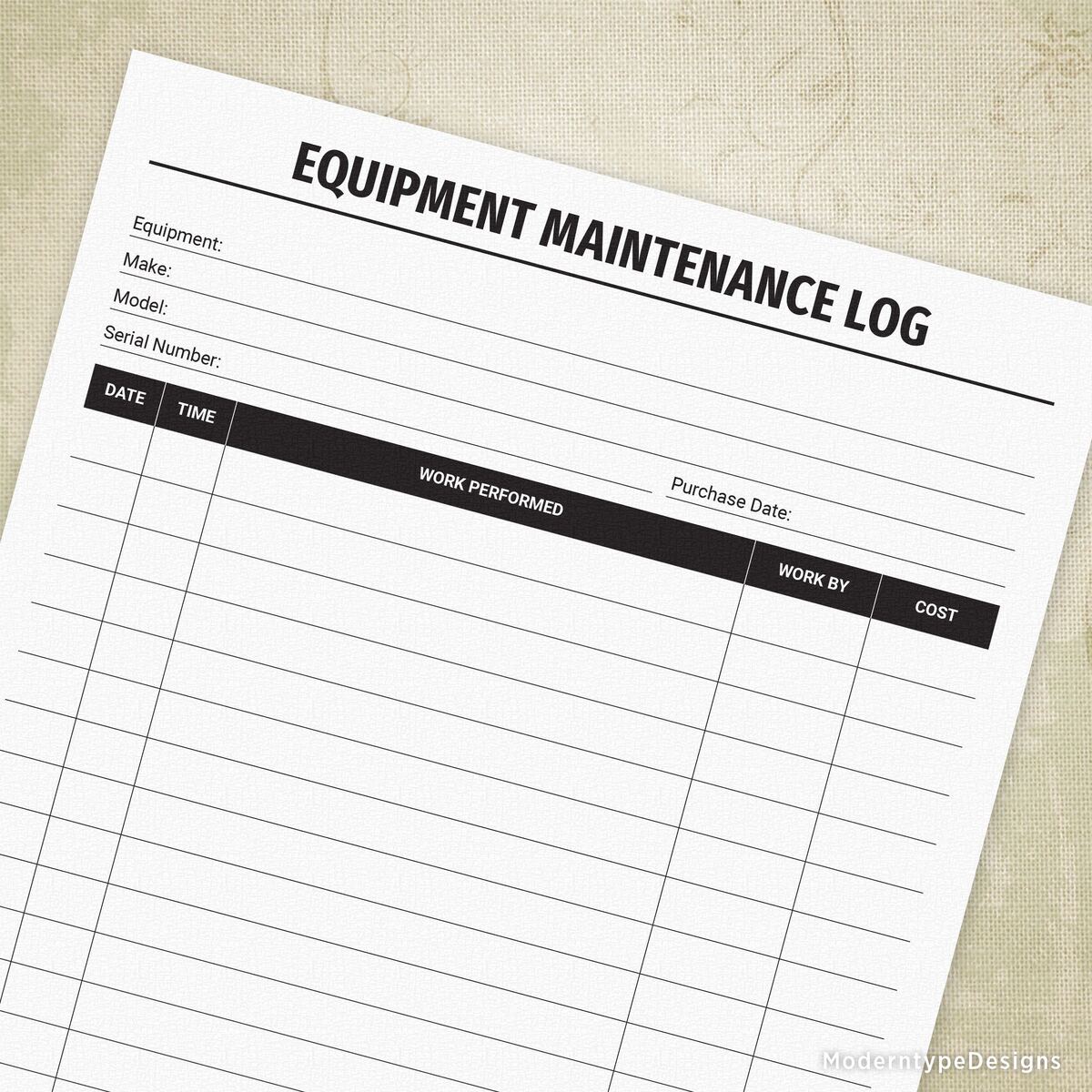
Professional technicians don't just fix machines — they build the paper trail that protects the facility. A service record worth its name captures:
- Timestamped service entries — date, time, and technician on every visit
- Technician identity and credential (who did the work, and what qualifies them)
- Work performed — inspection, lubrication, calibration, adjustment, or repair
- Parts replaced, with part numbers and, where applicable, serial numbers
- Measured values — belt tension, deck wear, amp draw, torque specs, calibration readings
- Preventive-maintenance schedule and proof each interval was met
- Out-of-service tags: when a machine was locked out, why, and when it returned
- Manufacturer-recommended procedures followed (per the owner's manual and ASTM F2276)
This documentation pays for itself far beyond the courtroom. It substantiates warranty claims when a component fails early. It preserves resale value when the facility refreshes its floor — a machine with a complete service history is a fundamentally different asset than one without. It gives insurers evidence of an active risk-management program. And it turns preventive-maintenance scheduling from guesswork into a calendar.
Protecting a six-figure investment
A fully equipped commercial floor represents six figures of capital, and its service life is not fixed — it is earned. Industry guidance puts a well-maintained commercial treadmill at 7–12 years of service, while a neglected one may need replacement in 3–5.[8] Across a cardio row of twenty machines, that difference is an entire second purchase cycle.
The maintenance line item is modest by comparison. Published benchmarks put annual maintenance and repair spending at roughly $3,600–$6,000 for a boutique studio and $24,000–$60,000+ for a large commercial club[9] — a fraction of the replacement cost it defers, before counting the downtime it prevents. In a market where 77 million Americans hold memberships and expect working equipment,[10] out-of-order signs are how clubs lose members.
Lifespan doubled
Preventive maintenance is the difference between a 3–5 year machine and a 7–12 year machine.
Failures caught early
Scheduled inspections find worn decks, drifting belts, and failing bearings before they become injuries or motor replacements.
Asset value preserved
Documented service history supports warranty claims, insurance positioning, and resale value at refresh time.
The person behind the paperwork
None of this happens without a competent human being on the floor: someone who knows what to inspect, how to measure it, which parts to replace, and how to document all of it so the record stands up — to a warranty administrator, an insurer, or a courtroom. That is the real role of the fitness equipment technician: not just a repairer of machines, but the guardian of a facility's safety, its liability posture, and its capital investment.
For operators, the takeaway is simple: put every machine on a documented preventive-maintenance program run by a qualified technician. For technicians, it is an invitation — the industry needs professionals who can deliver exactly this, and can prove they know how.
References
All sources link to the original publication. Publication dates are shown where the publisher provides them.
- [1]U.S. Consumer Product Safety Commission. Hospital Emergency Room Treatment for Some Product-Related Injuries Rose During the Pandemic (≈409,000 exercise-equipment ER injuries in 2020) — 2021.
- [2]U.S. Consumer Product Safety Commission. National Electronic Injury Surveillance System (NEISS) — injury data program — ongoing.
- [3]U.S. Consumer Product Safety Commission. CPSC and Peloton Announce Recall of Tread+ Treadmills After One Child Death and 70 Incidents (≈125,000 units) — May 5, 2021.
- [4]Alevoor R. et al., PubMed / Physician and Sportsmedicine. Treadmill-associated head injuries on the rise: an 18-year review of U.S. emergency room visits — 2018.
- [5]ASTM International. ASTM F2276-23 — Standard Specification for Fitness Equipment — 2023.
- [6]Enjuris (legal reference). Can You Sue for Injuries at the Gym? — negligence elements and the role of maintenance records — accessed 2026.
- [7]Shouse Law Group. Injured by Faulty Equipment at a Gym — liability waivers and gross negligence — accessed 2026.
- [8]Core Health & Fitness. How Long Do Treadmills Last? Commercial Lifespan, Maintenance & Replacement Strategy — accessed 2026.
- [9]Ntaifitness. Gym Equipment Maintenance Cost Guide — annual maintenance budgets by facility size — 2026.
- [10]Health & Fitness Association (formerly IHRSA). How 77 Million Fitness Members Work Out — New HFA Data — 2025.