 Now reading
The Fitness Industry Is Booming
Right to Repair & the Independent Technician
Equipment Safety, Liability & Protecting the Investment
For Auto Techs & Skilled Problem Solvers
For Electricians
For HVAC Technicians
For Plumbers

For IT Support Specialists
The gym industry is booming.
Almost no one can fix the equipment.
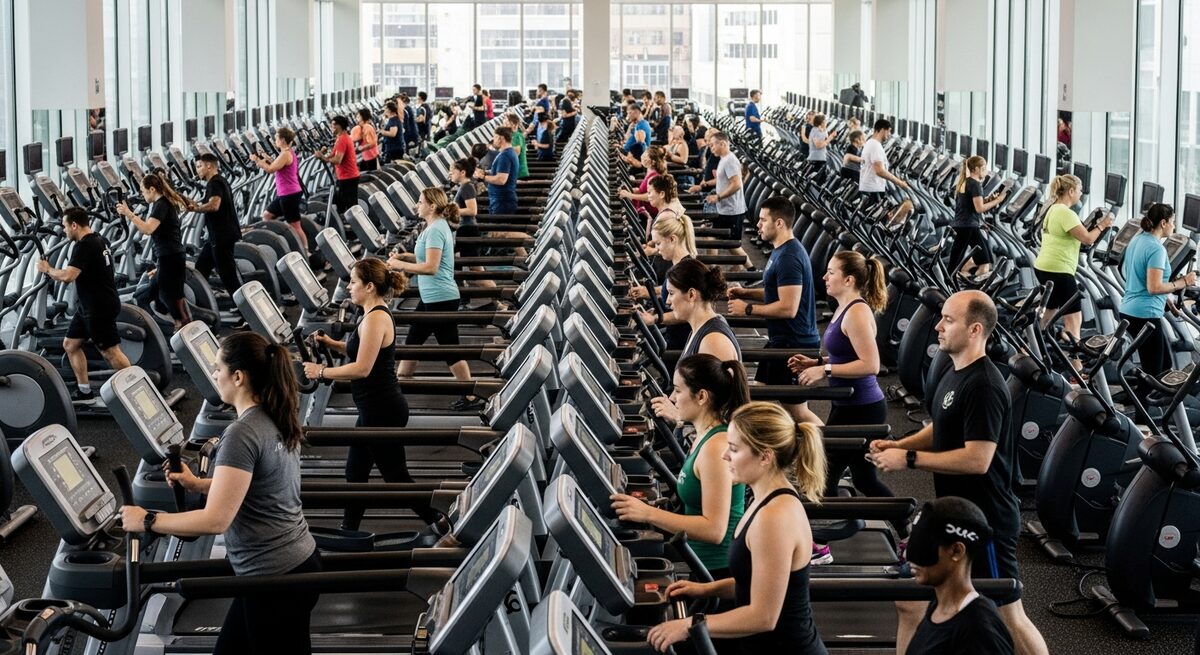
77 million Americans now train at 55,000+ gyms — plus millions of home setups. Yet there's no army of technicians keeping that equipment running. Auto, HVAC, and plumbing are crowded with hundreds of thousands of workers. Certified fitness equipment technicians? Still rare. That gap is your opportunity.
Americans now train at U.S. gyms & studios
Fitness facilities nationwide — a record high
U.S. fitness industry, growing every year
The opportunity gap
Demand for service is exploding while the supply of qualified technicians stays tiny. The traditional trades don't have that problem — they're already packed.
Massive installed base
Every treadmill, elliptical, cable stack, and strength machine across 55,000+ facilities needs regular service — and home equipment has surged too.
A field that isn't crowded
Auto (805,600), plumbing (504,500), and HVAC (425,200) are mature, competitive trades. Certified fitness equipment techs remain a small, emerging workforce.
Fast, affordable entry
No multi-year apprenticeship or state license to begin. Get NCFET-certified in weeks, starting from $449 — then start servicing the market.
How the careers stack up
Side by side, with cited labor statistics. The fitness equipment technician row stands out for one reason: real pay and demand without the crowd or the years of barriers.
| Career path | People already in the field | Median pay (2024) | 10-yr outlook | Barrier to entry | Comparative opportunity |
|---|---|---|---|---|---|
Fitness Equipment Technician Best opportunity | Emerging — very few certified | $70k–$78k (est.) | Booming, unmet demand | Weeks · from $449 | 95 |
HVAC Mechanic / Installer | 425,200 in the field | $59,810 | +8% (much faster) | Apprenticeship + license | 72 |
Personal Trainer / Instructor | 370,100 in the field | $46,180 | +12% (much faster) | Cert — saturated field | 64 |
Plumber / Pipefitter | 504,500 in the field | $62,970 | +4% (average) | 4–5 yr apprenticeship + license | 61 |
Auto Service Technician | 805,600 in the field | $49,670 | +4% (average) | Years on the job + tools | 55 |
Open a New Gym | 55,000+ gyms (saturated) | Owner income varies | +20% members since 2019 | $50k–$500k+ capital, high risk | 38 |
Median pay, employment, and 10-year outlook for auto, HVAC, plumbing, and personal training are from the U.S. Bureau of Labor Statistics (Occupational Outlook Handbook, May 2024 wages; 2024–2034 projections). Fitness equipment technician pay reflects 2024–2025 job-board aggregates; the role has no dedicated BLS occupation code yet. The "Comparative Opportunity Score" is an illustrative NCFET composite — see methodology below.
One technician, an ocean of equipment
The clearest way to see the opening: how much installed equipment each trade has to serve per working technician. Fitness equipment isn't close to the others.
Fitness Equipment
Households of equipment per technician — a wide-open market.
Roughly 10× the equipment-per-tech of auto or HVAC.
HVAC / Air Conditioning
Homes with air conditioning per HVAC technician.
Auto / Vehicles
Registered vehicles per auto mechanic.
Equipment / units to serve per technician
Installed base: ~283M registered vehicles (U.S. FHWA); ~88% of U.S. homes have air conditioning (U.S. EIA, RECS); 30 million+ U.S. households own fitness equipment (Statista / industry estimates) plus 55,000+ commercial gyms. Auto and HVAC technician counts are BLS (2024); the fitness equipment technician count is an NCFET estimate (no dedicated BLS code). Ratios are rounded and illustrative.
Pay that rivals — and beats — the trades
Experienced fitness equipment technicians can earn $70k–$78k — at or above auto mechanics, HVAC techs, and plumbers — without years of apprenticeship or a state license to get started.
The other trades are already crowded
More than 800,000 auto mechanics and half a million plumbers already compete for work. There is no comparable BLS occupation for fitness equipment technicians — because the certified workforce is still small and emerging.
Fitness Equipment Technicians: an open lane. Few certified pros are servicing a record-large, still-growing installed base.
One trade is shrinking. The other is taking off.
As electric vehicles need far less routine maintenance, demand for traditional auto repair is projected to soften. Meanwhile the fitness industry keeps adding members, facilities, and equipment that all need service — so the lines head opposite ways.
- Fitness equipment servicing demand
- Traditional (ICE) auto repair demand
Illustrative demand index (2018 = 100). The fitness line reflects sustained growth in U.S. fitness membership, facilities, and equipment revenue (HFA / Statista). The auto line reflects rising EV adoption and EVs' substantially lower routine-maintenance needs (U.S. Department of Energy; Consumer Reports). Years marked * are projections.
Comparative Opportunity Score
Weighing demand-to-supply, barrier to entry, and growth, fitness equipment repair is the most open lane for someone entering the field today — ahead of the mature trades and far ahead of the capital-and-risk gamble of opening a gym.
The "Comparative Opportunity Score" is an illustrative NCFET composite (0–100) for orientation, not a government statistic. It blends demand-to-supply balance, barrier to entry (time and cost to start), and projected growth.
Don't build a gym. Service them all.
Opening a gym means big capital and big risk for a single location. Certifying as a technician costs a fraction — and every gym in town becomes a potential client.
Open a new gym
- Startup capital$50k–$500k+
- Ongoing riskLease, payroll, churn
- MarketOne location, saturated
- Time to revenueMonths to build out
Get NCFET-certified
- Cost to startFrom $449
- Ongoing riskLow — your skills travel
- MarketEvery gym in your region
- Time to credentialWeeks, online
Owning the business: a 3-year outlook
Want to run your own show? Compare what it costs to start — and the net profit at the end of each year — for a new gym, a new auto shop, and a fitness equipment technician franchise.
| Path | Initial investment | Net · end of Year 1 | Net · end of Year 2 | Net · end of Year 3 |
|---|---|---|---|---|
Startup Gym Owner | $200k | -$45k | $25k | $65k |
Startup Auto Shop Owner | $125k | -$10k | $40k | $75k |
Fitness Equip. Tech Franchisee Lowest risk | $30k | $48k | $90k | $130k |
Net profit at the end of each year
- Startup Gym Owner
- Startup Auto Shop Owner
- Fitness Equip. Tech Franchisee
Illustrative financial model for orientation only — not a projection of your results or a guarantee of earnings. Initial-investment ranges reflect published benchmarks: independent gyms $50k–$500k+, auto repair shops ~$50k–$200k, and mobile fitness equipment service / franchise startups ~$15k–$40k. Annual net figures assume typical overhead and ramp for each model; actual results vary by location, financing, and effort.
Why this field wins for newcomers
Low barrier to entry
No multi-year apprenticeship or state license required to begin earning.
Demand outpaces supply
A record-large installed base of equipment and very few certified techs to service it.
Real, scalable income
Competitive pay from day one, with room to grow into independent and contract work.
Recurring relationships
Gyms need preventive maintenance and repairs year-round — repeat clients, not one-offs.
Sources & methodology
- U.S. Bureau of Labor Statistics, Occupational Outlook Handbook — median annual wages (May 2024), employment (2024), and 2024–2034 projections for Automotive Service Technicians & Mechanics, HVAC Mechanics & Installers, Plumbers, Pipefitters & Steamfitters, and Fitness Trainers & Instructors.
- Fitness industry scale (55,000+ facilities, 77 million members, ~$40B market) — Health & Fitness Association (formerly IHRSA) and Statista, 2024.
- Fitness equipment technician pay ($70k–$78k) — 2024–2025 aggregates from Indeed, ZipRecruiter, and Salary.com for experienced and specialized technicians. No dedicated BLS occupation code exists for this role yet.
- Installed base — ~283 million registered vehicles (U.S. Federal Highway Administration); ~88% of U.S. homes have air conditioning (U.S. Energy Information Administration, RECS); 30 million+ U.S. households own fitness equipment (Statista / industry estimates), plus 55,000+ commercial gyms. Fitness equipment technician headcount is an NCFET estimate.
- Industry trend — sustained growth in U.S. fitness membership, facilities, and equipment revenue (HFA / Statista) vs. rising EV adoption and EVs' lower routine-maintenance needs (U.S. Department of Energy; Consumer Reports). Trend lines are an illustrative index.
- Business 3-year outlook — illustrative model using published startup-cost benchmarks (independent gyms $50k–$500k+, auto shops ~$50k–$200k, mobile fitness equipment service / franchise ~$15k–$40k). Net figures are illustrative, not a guarantee of earnings.
- The "Comparative Opportunity Score" is an illustrative NCFET composite for orientation only — it is not a government or third-party statistic and blends demand-to-supply, barrier to entry, and projected growth.