A safety inspection is different from maintenance: maintenance keeps machines working, inspection verifies they are safe to use and documents that verification. Insurers, attorneys, and (after an incident) courts all ask the same question of a facility: can you show a documented inspection program executed by qualified people? This checklist is the framework NCFET-certified technicians use to answer yes.
Use it as a quarterly formal inspection layered on top of a normal preventive maintenance program. Every line item gets a pass/fail/corrected entry per machine, and every fail gets the machine tagged out until corrected.
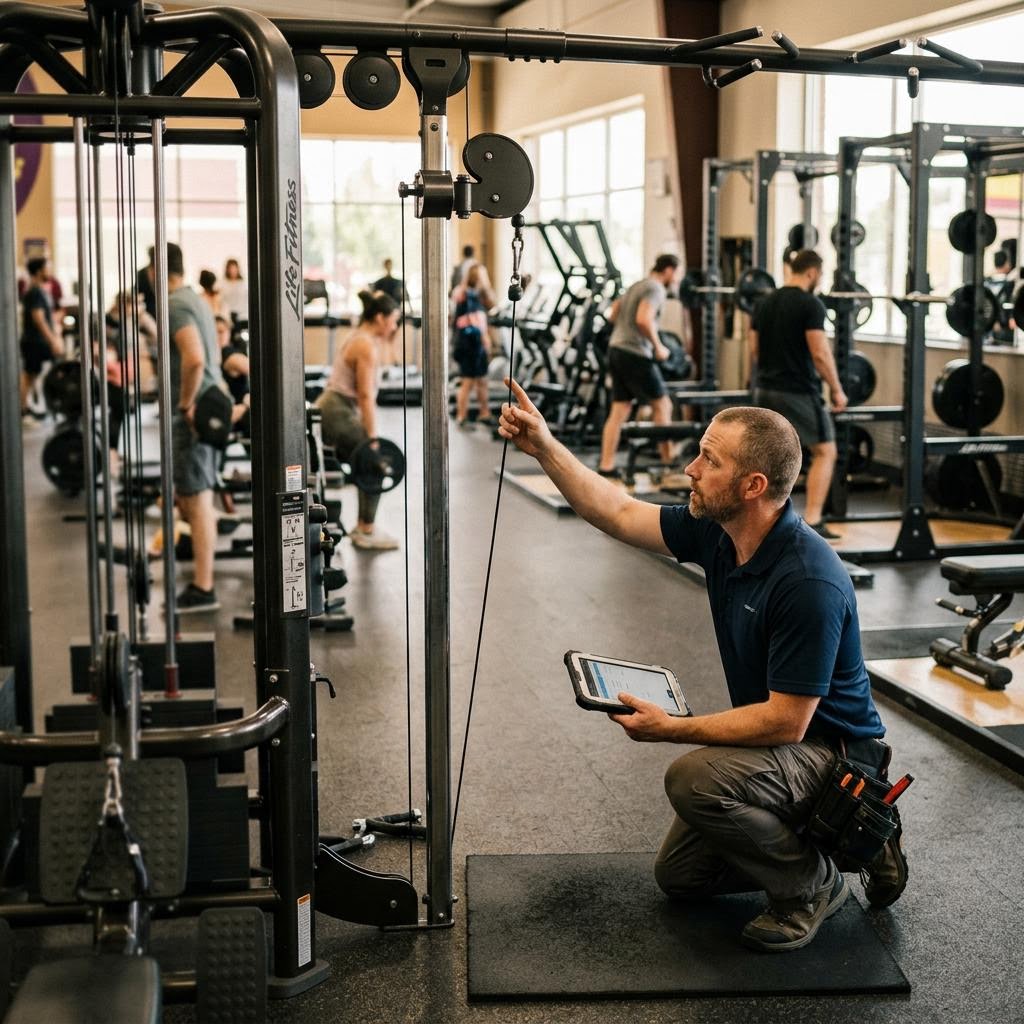
Universal checks (every machine, every category)
Applied to every unit on the floor before category-specific checks:
- Structural: frame welds at high-stress joints show no cracking or paint-line separation; no bent members; feet/stabilizers intact and the machine sits level without rocking.
- Fasteners: sample-torque critical bolts (handles, seats, pedals, weight horns); nothing hand-loose anywhere a user contacts.
- Warning labels and placards: present, legible, and matching the manufacturer's label set (missing labels are a recurring finding in post-incident litigation).
- Upholstery and grips: no tears exposing foam (hygiene + pinch risk), no loose or spinning grips.
- Housekeeping: adequate clearance spacing per manufacturer requirements; power cords routed without trip exposure.
Treadmills
The highest-incident-rate category gets the deepest checks:
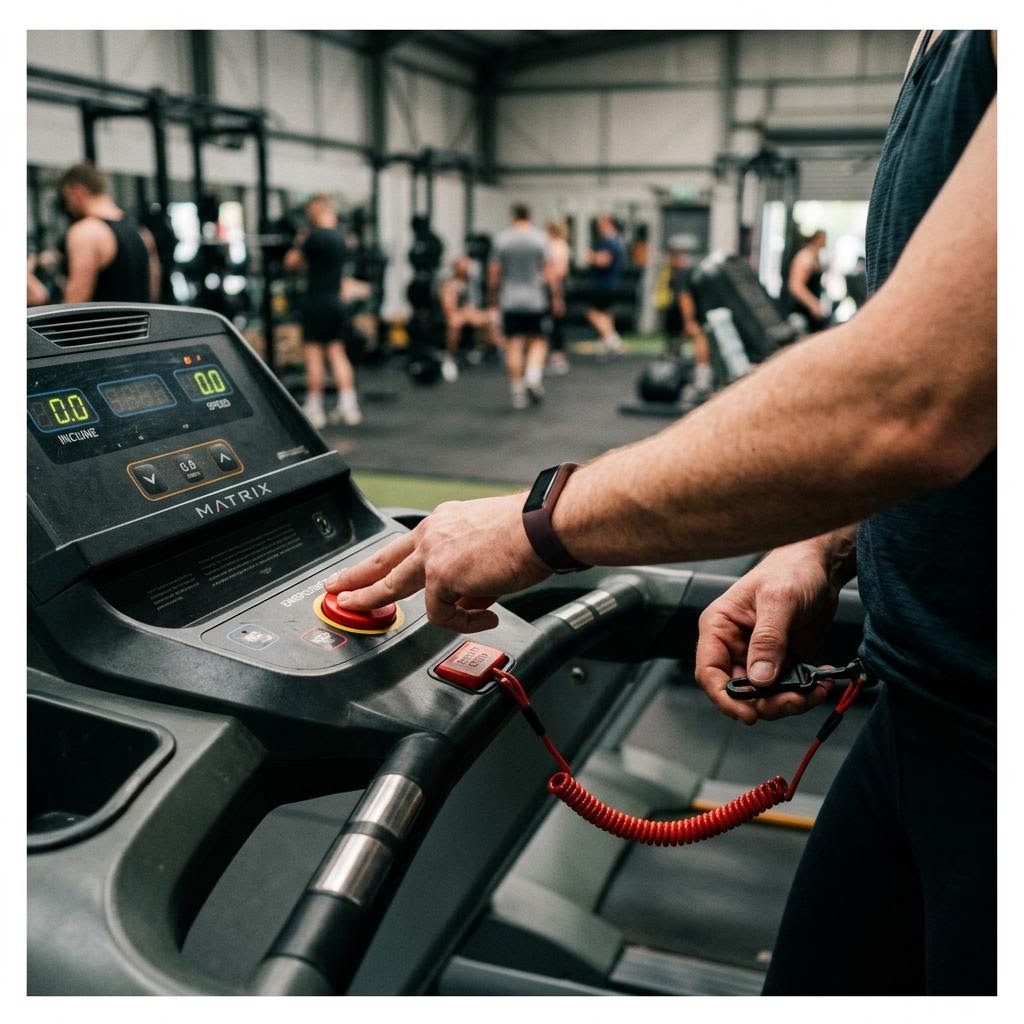
- Safety key/lanyard stops the belt immediately; auto-stop verified every inspection without exception.
- Belt condition (no edge fraying/delamination), tracking centered, tension within lift-test spec.
- Rear roller guards and side foot-rail integrity — rear entrapment clearance intact per the machine's design.
- Deck lubrication state and amp draw within spec (electrical stress is a fire safety issue, not just wear).
- Emergency stop button (commercial units) latches and resets correctly; incline returns home on stop.
- Clearance behind the belt per manufacturer (commonly specified as an open zone to reduce ejection entrapment risk).
Strength equipment — selectorized and plate-loaded
Cable systems and stored-load paths:
- Every cable inspected to rejection criteria (broken strands, jacket damage, kinks, corrosion, termination movement) — any failure tags the machine out immediately.
- Pulleys spin free, cables ride groove centers, guards and cable retainers in place.
- Weight stack: guide rods straight and lubricated, plates lift flat, selector pin holes not elongated, stack shrouds/guards intact (finger entrapment).
- Plate-loaded: weight horns tight, collars/stops present, pivot bearings without play.
- Adjustment pop-pins engage fully and lock under load on benches, racks, and adjustable arms.
- Safety catches/spotter arms on racks: engagement surfaces undamaged, pins straight, height settings functional.
Cardio (non-treadmill) and free-weight areas
Ellipticals, bikes, rowers, and the free-weight floor:
- Ellipticals: pedal arms without lateral play, ramp rollers intact, no exposed pinch points at the linkage.
- Bikes: pedals and cranks torqued, seat posts clamp firmly at all heights, self-powered units power up and brake correctly.
- Rowers: chain/strap condition, handle return smooth, footplate straps intact, rail clean and seat rollers smooth.
- Free weights: dumbbell heads tight to handles (shake test), plate racks not overloaded beyond rating, bar sleeves spin with collars available, benches stable with no cracked pads.
- Flooring: no curled mat edges or gaps at equipment transitions.
Documentation standard
Each inspection produces a dated record per machine: unique asset ID, every line item's result, corrective actions with parts used, out-of-service tags issued, and the inspector's name and credential. Retain records for at least the period your insurer and state statute of limitations suggest — multi-year retention is standard practice.
The inspector's qualification matters as much as the checklist. Facilities and insurers increasingly expect inspections performed or supervised by credentialed technicians — which any facility can verify for NCFET-certified professionals through the public registry at ncfet.com/verify.
Frequently Asked Questions
How often should commercial gym equipment be safety-inspected?
Formal documented safety inspections quarterly, layered on daily staff walk-throughs and a monthly maintenance program. High-usage facilities (24-hour access, 1,000+ members) often move to monthly formal inspections for cardio and cable equipment, which carry the highest incident rates.
Are gym equipment inspections legally required?
In the U.S. there is generally no single federal inspection mandate for fitness facilities, but the duty arises indirectly and powerfully: premises liability law expects reasonable care including maintenance to manufacturer specifications, insurers require documented programs as policy conditions, OSHA's general duty clause applies to facilities as employers, and some states and municipalities impose specific health-club regulations. Documented inspections are the standard of care regardless of jurisdiction.
Who should perform gym equipment safety inspections?
Daily walk-throughs are staff-level, but formal inspections should be performed by a qualified technician — someone trained on cable rejection criteria, electrical checks, and the manufacturer's service requirements. A national credential such as NCFET certification gives facilities a verifiable way to establish that qualification, and every credential can be checked at ncfet.com/verify.
What happens if a machine fails inspection?
It comes out of service immediately: out-of-service tag, power disconnected or selector locked where applicable, and physically signed or barriered so members cannot use it. It returns to service only after the corrective repair is completed and documented. An inspection program that finds faults but leaves machines in service is worse than no program in a liability proceeding.
Standards & References
- ASTM F2276 — Standard Specification for Fitness Equipment
- ASTM F1749 — Fitness Equipment and Fitness Facility Safety Signage and Labels
- OSHA — General Duty Clause, Section 5(a)(1)
This guide is provided as a free educational resource by NCFET and its certified technician team. Always follow your equipment manufacturer's service manual, and leave line-voltage electrical work to qualified professionals. You are welcome to cite or link to this guide; please attribute it to the NCFET certified technician team and link to this page.
Related Guides
Need a professional? Or want to become one?
Find qualified service providers in the NCFET directory, verify any technician's credential at ncfet.com/verify, or start your own path to national certification.